
Inside the UAEbacked RSF siege of Sudans elObeid
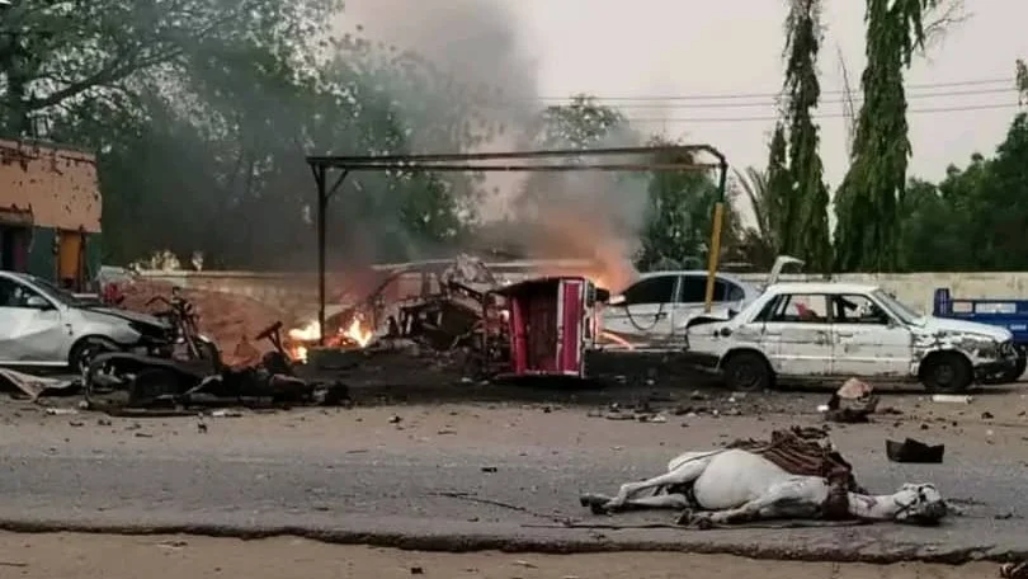
On Friday morning, Abdullah, a lawyer in the Sudanese city of el-Obeid, had a moment of peace to reflect on two weeks of drone strikes and over three years of war.
“The suffering endured by the citizens of el-Obeid due to the war is beyond comprehension,” he told Middle East Eye.
“Loss of life, hunger, and insecurity perfectly reflect the catastrophes caused by the conflict between the army and the Rapid Support Forces,” he said.
“These forces continue to bombard civilians, vital and strategic centres, service facilities, and the very foundations of life, aiming to displace citizens and force them from their lands and cities.”
As Abdullah and other residents of North Kordofan’s capital spoke to MEE, the UN Human Rights Council was holding an urgent debate on the situation in Sudan, with the paramilitary RSF, which is backed by the United Arab Emirates, besieging el-Obeid from the west, north and south.
New MEE newsletter: Jerusalem Dispatch
Sign up to get the latest insights and analysis on Israel-Palestine, alongside Turkey Unpacked and other MEE newsletters
People in the strategically vital city, which sits at the intersection of several roads connecting the capital Khartoum to Kordofan and Darfur, the RSF’s stronghold in western Sudan, have lived with the fear of an RSF takeover for much of the war.
Almost 600,000 people are now living in el-Obeid, including more than 105,000 who have sought refuge in the city after fleeing violence and famine elsewhere.
Shortly after the war between the Sudanese Armed Forces (SAF) and the RSF began in April 2023, el-Obeid became a contested site, with the SAF’s 5th Infantry Division continuing to maintain its headquarters in the city.
'Everyone here knows that the UAE supports the RSF'
- Abdullah, lawyer in el-Obeid
In the last three weeks, the RSF, whose fighters are present in the surrounding countryside and in the town of Barah, about 30km north of el-Obeid, has launched a wave of intense drone strikes targeting petrol stations and oil tankers.
The main electricity substation, water facilities, the main market and fuel depots have all been hit. Civilians have been killed and injured. The price of basic goods has shot up.
Satellite imagery analysed by Yale’s Humanitarian Research Lab (HRL) has shown visible damage “consistent with intentional bombardment of civilian infrastructure for the sustainment of life”.
Between 25 May and 25 June, “at least eight gas stations in el-Obeid have sustained targeted damage consistent with bombardment”, the HRL said in a report earlier this week.
The satellite imagery analysis has also shown that the Sudanese army has established at least 14 checkpoints and a 51-kilometre network of defensive berms and trenches around el-Obeid.