
Tunisian President Visits Water Complex Criticizes Frequent Electricity Cuts
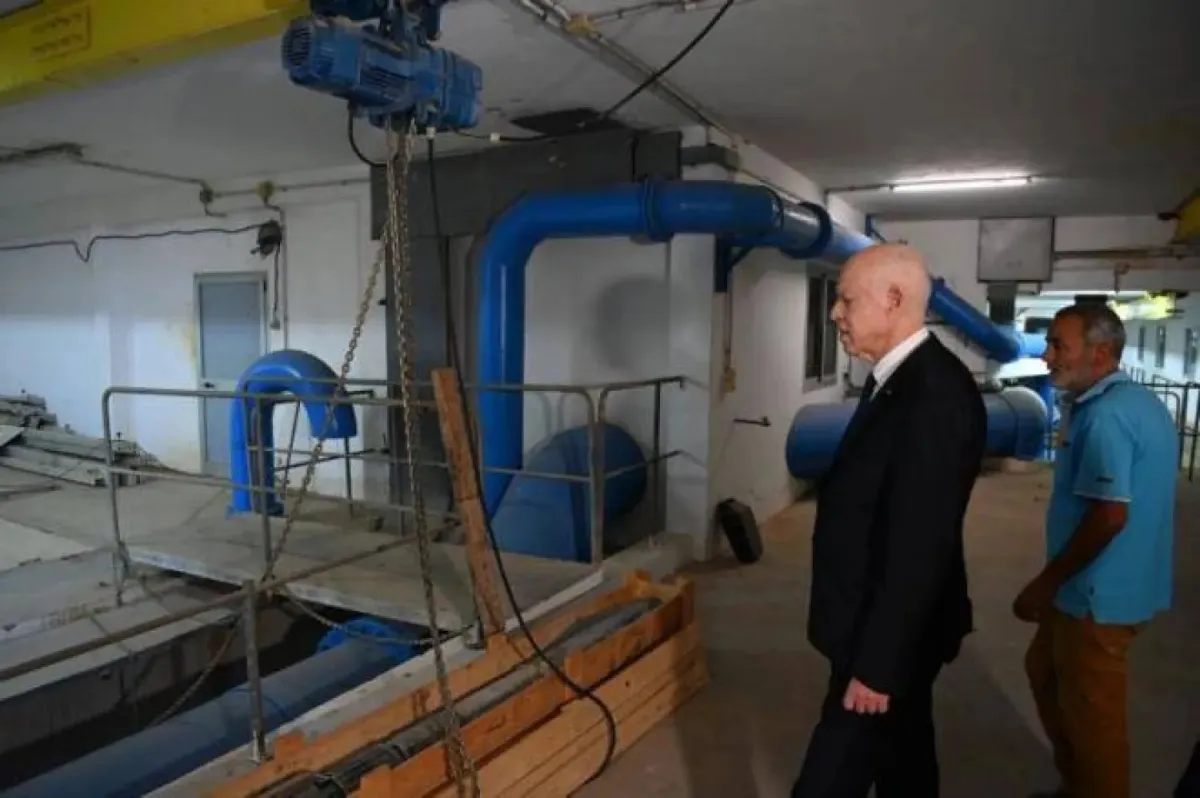
In his first public appearance since July 8, Tunisian President Kais Saied on Saturday visited a water complex north of the capital, criticizing repeated electricity cuts and water outages amid a prolonged heatwave across the country.
Saied made a surprise visit to the Ghedir El Golla water complex, operated by the state-owned National Water Distribution Company (SONEDE), to examine the causes behind repeated electricity and water cuts in several areas, and to end days of speculation over his absence from public engagements.
Saied’s absence from official activities had driven speculation about his health after Italian media reported that he had undergone emergency surgery, although the reports were never confirmed by the Tunisian presidency or other official sources, according to dpa.
The Ghedir El Golla station, located in Hrairia, is one of Tunisia’s largest water facilities. It stores, treats, and distributes water supplied from the Kasseb Dam and the Medjerda–Cap Bon Canal. The station pumps between 500,000 and 700,000 cubic meters of water per day, providing drinking water to most neighborhoods across Greater Tunis.
The president’s visit came as residents across Tunisia complained of repeated electricity and water cuts amid soaring temperatures, with record demand for electricity exposing the strain on ageing infrastructure and years of drought.
“This is not normal,” Saied said of the electricity outages. “It happens in many countries, but only for a limited period,” he noted, adding that the simultaneous recurrence of power cuts across several regions raised questions.
“Anyone who has failed in their responsibilities will bear the consequences,” he said.
Earlier, the state electricity and gas utility said it would implement rolling blackouts to prevent the collapse of the national grid, publishing daily schedules showing the areas affected.
However, residents in several towns and cities said they had experienced unscheduled outages lasting several hours, disrupting businesses, damaging refrigerated food stocks in shops, restaurants and cafés, and leaving many households without electricity, air conditioning and, in some cases, running water during the peak of the heatwave.
Temperatures have remained between 8 and 13 degrees Celsius above seasonal averages for more than a week, according to the National Institute of Meteorology, which forecasts the heatwave will continue until early next week before easing slightly from Wednesday.
aawsat.com