
Former UN oversight chief says ICC prosecutor Karim Khan is victim of massive stitchup
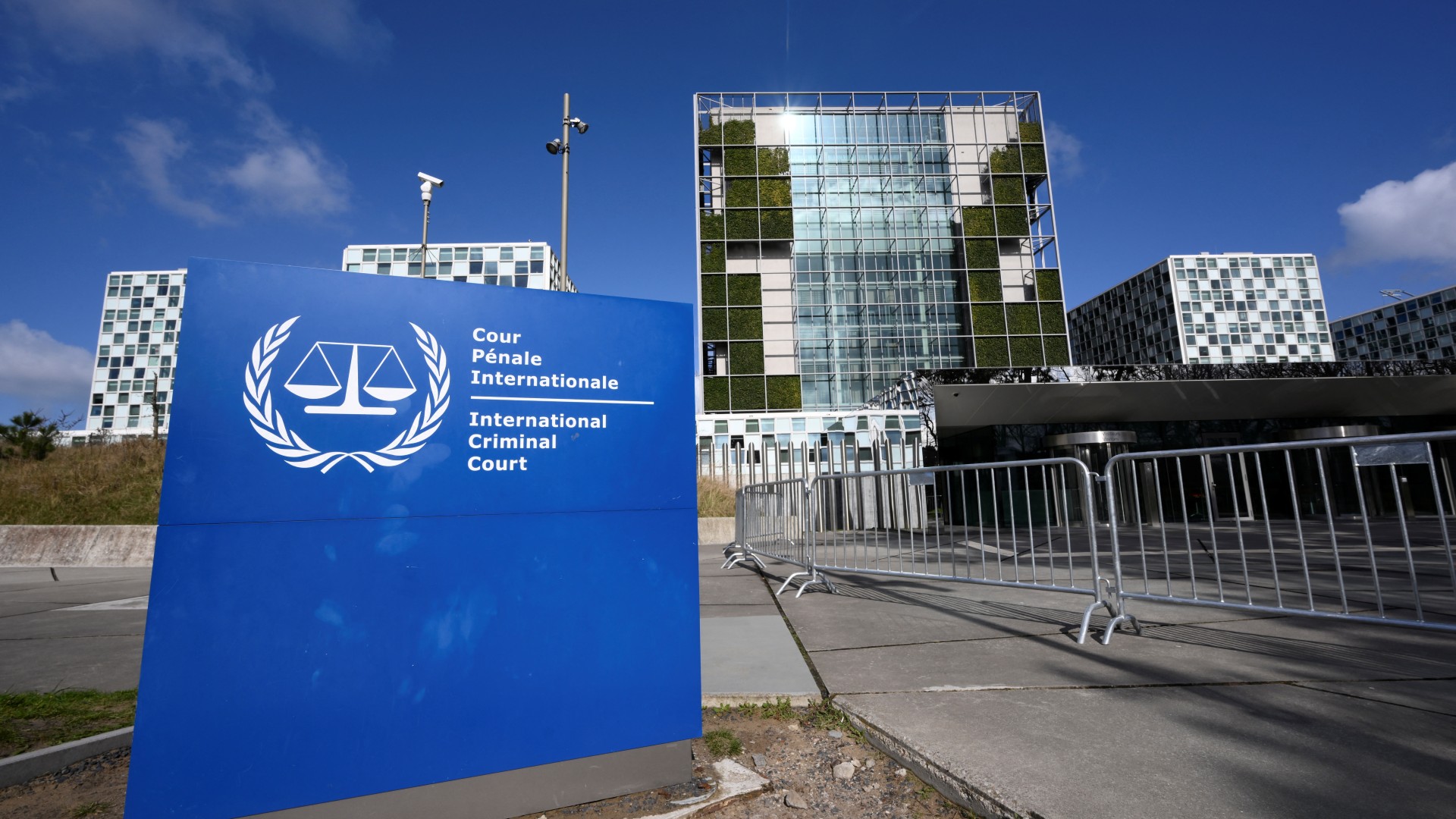
A former United Nations investigations chief has accused the International Criminal Court’s executive body of subjecting Prosecutor Karim Khan to a “stitch-up” in their decision to suspend him from office over misconduct allegations.
Ben Swanson is a former UN assistant secretary-general and deputy head of the UN Office of Internal Oversight Services (OIOS), and has previously served as director of the OIOS Investigations Division.
Over the past year, he has submitted four expert's opinions commissioned by Khan's legal team to the 21-member bureau of the Assembly of States Parties (ASP), criticising the manner in which the investigation into misconduct allegations facing the prosecutor was conducted, and the subsequent handling of the process by the bureau.
In his latest submission on 28 June, obtained by Middle East Eye through independent sources, Swanson denounced the 8 June decision by the bureau, which suspended the prosecutor after concluding by a majority that he committed “serious misconduct”.
The bureau’s decision departed from the unanimous conclusion of a panel of three judges it appointed, which in March concluded that the facts presented in the UN investigation "do not establish misconduct or breach of duty under the relevant framework".
New MEE newsletter: Jerusalem Dispatch
Sign up to get the latest insights and analysis on Israel-Palestine, alongside Turkey Unpacked and other MEE newsletters
Based on his reading of the judges’ report in conjunction with the bureau’s decision, Swanson wrote: “I am of the opinion that the Prosecutor is the victim of a massive ‘stitch-up’ and given what has happened since the release of the Panel’s Report I doubt whether justice will be done or seen to be done.”
Swanson accused the bureau of adopting “a dystopian method” of justice and of pursuing “an activist agenda” in its decision to carry out both judicial and fact-finding functions after the process it built did not lead to a desired outcome.
“It is clear that an activist agenda is being pursued to remove the Prosecutor from his post, at all costs, by the weaponisation of such scant evidence that may exist, by ignoring the wealth of countervailing evidence available to the Bureau and by failing to take account of the wisdom of three international Judges,” he wrote.
The ASP, which is made up of diplomatic representatives from the court's 125 member states, is due to vote on Khan's future at the UN headquarters in New York City on Friday.
'That was not what was alleged'
The judicial panel was part of the process authorised by ASP President Paivi Kaukoranta in November 2024, when she decided to outsource the misconduct probe to the OIOS, after the complainant against Khan refused to cooperate with the ICC’s own investigative body.
According to bureau documents, the four allegations under investigation comprised a complaint by a woman in Khan’s office regarding “unwelcome conduct of a sexual nature” and abuse of authority, as well as three allegations of retaliation against members of his office. Khan has denied all allegations of misconduct or breach of duty.
The bureau's decision did not make a finding of misconduct related to any of the retaliation allegations.
Instead, the confidential decision seen by MEE states that the bureau found "the evidence establishes beyond reasonable doubt" that Khan "engaged in a sexual relationship" with the complainant, and argued that "in the context of that power imbalance a sexual relationship could never be appropriate".
It added that "the conduct of the Prosecutor constitutes the improper use of a position of influence, power or authority" against her.
Khan denied the existence of any sexual relationship, while the complainant's account centred on allegations of non-consensual conduct.
In an interview with CNN last week, which was her first public appearance in connection with the case, the complainant stood by the allegation of non-consensual sexual conduct.
But the bureau’s decision appeared to reframe the nature of the sexual misconduct, in an apparent departure from the sexual assault allegations that have been the centrepiece of the investigation as well as media leaks about the case.
In his letter, Swanson told the bureau that its conclusion is based on a novel allegation that is materially different from the subject matter of the investigation.
“What is charged reads as if the Prosecutor and [the complainant] have indulged in an inappropriate, consensual, workplace romance. That was not what was alleged and in any case has not been proven either,” he wrote.
He added that the bureau carried out its own credibility assessment, deciding that the complainant’s account was credible, after the OIOS and the panel of judges were unable to establish the credibility of the complainant and her evidence.
In Swanson’s view, after the panel of judges submitted its report, the bureau had four choices left: close the matter; ask the OIOS to investigate further and resolve the issues mentioned by the panel; restart the investigation; or hold an adjudicated process.
He pointed out that an adjudicated process would have given the bureau an opportunity to cross-examine witnesses in a manner that properly establishes credibility.
MEE previously reported that Khan’s legal team formally requested such a process in a letter to the ASP president on 30 July 2025. But the bureau declined to incorporate those requirements in the misconduct probe, including the request for an adjudicative hearing before the panel.
'Positive spin'
Swanson criticised the bureau for choosing to disregard the judicial panel and to make its own conclusion and credibility assessments saying that the evidence of serious misconduct reached the required standard.
“The Bureau in determining credibility did not act with the same legal restraint as the Panel, declaring themselves unrestricted, and by using semantic gymnastics promptly used the same material as was available to the Judges, with the addition of more submissions from the Prosecutor and [the complainant], although they discounted the latter’s, to enable them to make credibility assessments,” the expert wrote.
He added that the bureau failed to assess the credibility of the evidence itself, which he said carried equal or more relevance than the credibility of the source of the evidence.
'I am of the opinion that the Prosecutor is the victim of a massive ‘stitch-up’ and [...] I doubt whether justice will be done or seen to be done'
- Ben Swanson, former UN oversight chief
“The Bureau seems ignorant of this, they have a form of credibility analysis which puts a positive spin on [the complainant] and everything she says and a negative spin on the Prosecutor and anything he says or produces and even on what was said by other witnesses whose evidence throws doubt on what [the complainant] is saying,” he wrote.
Swanson concluded that the bureau's finding is "unsafe and should not be relied upon as a proper basis for disciplinary action," and that states parties should instead give "decisive weight" to the panel's unanimous conclusion when they meet on 24 July.
MEE reported earlier this month that Sir James Eadie KC, the UK's first treasury counsel, had written to the ASP president in November warning of the illegality of granting the bureau any legal authority to determine whether misconduct has been committed.
In his opinion, submitted in a private capacity, he emphasised that the minimum required process should be judicial in nature and must lead to an oral hearing before a panel of judges in order to test the allegations and determine which facts could be proven beyond reasonable doubt.
“It is entirely inappropriate for the determinative function to be undertaken by executive or political bodies,” Eadie wrote.
Eadie noted that the proposal by the ASP president sought to treat the OIOS report as factual findings without an adjudicative process, and to lead to a hearing before the bureau involving the prosecutor only. The approach would threaten the independence and integrity of the ICC, he added.
middleeasteye.net