
John Esposito wouldbe Catholic priest turned renowned scholar of Islam dies aged 86
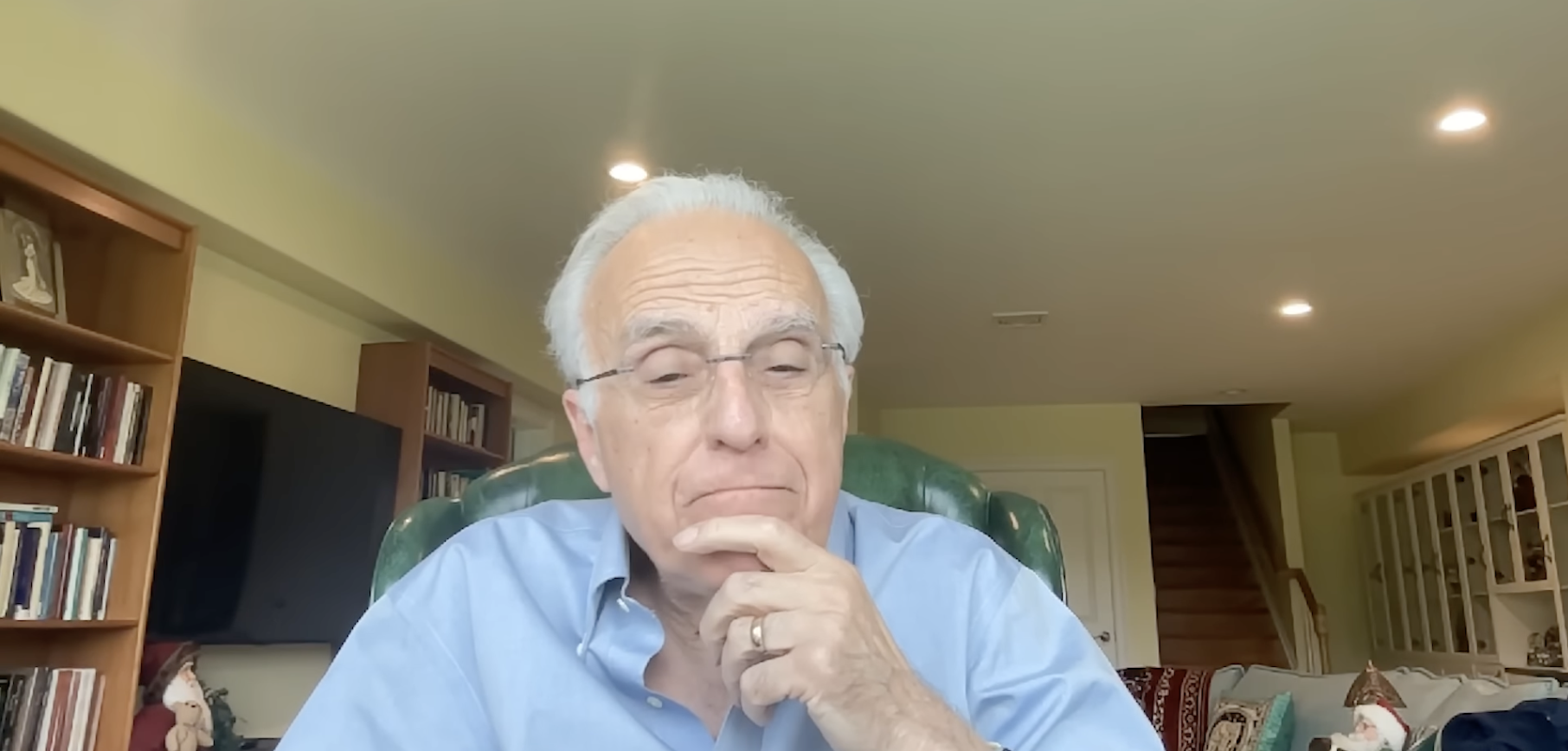
John Esposito, a world-renowned American author, professor, and scholar of Islam who consistently challenged western stereotypes, died aged 86 on Wednesday, his colleagues at Georgetown University in Washington, DC, announced.
A Catholic from an Italian family in Brooklyn, New York, Esposito spent a lifetime studying Islamic life, its laws, and its application to the political sphere around the world.
He wrote, edited, and contributed to some 55 books on the subject, most of them confronting what he said were misunderstood and even manufactured narratives on Muslims, in particular in the post-9/11 era.
One of his most cited works in recent years was Who Speaks for Islam? What a Billion Muslims Really Think, co-authored with US Muslim scholar Dalia Mogahed, and made possible by a wide-ranging multi-year Gallup survey examining Muslims globally on all aspects of life. The answers provided a powerful counter-narrative to the stereotypically negative portrayals of Muslims rife in western media at the time.
For his work, he received a staggering seven honorary doctorates from around the world.
New MEE newsletter: Jerusalem Dispatch
Sign up to get the latest insights and analysis on Israel-Palestine, alongside Turkey Unpacked and other MEE newsletters
While he built bridges, he was also astute in his criticism of governmental and societal crackdowns on Muslim groups, be it in France, India, or China.
Since founding the Prince Alwaleed Center for Muslim-Christian Understanding at Georgetown University in 1993, he remained at the institution until his death from heart surgery complications on 15 July.
Esposito also contributed to Middle East Eye in recent years.
'Visionary'
On social media, fellow scholars and global leaders hailed Esposito as a giant, both inside academia and outside of it.
"He never wavered from advocating for people being able to live their religion in public life or against the state imposing itself on people’s private moral lives. Bigotry and ignorance of the other were demons he loathed at his core," Jonathan Brown, a professor of Islamic civilisation at Georgetown University, who said he benefited from Esposito's mentorship, wrote on X.
"He was a rarity in that he - again, instinctively - knew it was wrong to condemn others just because the mob was shouting for it, and he stood heroically by those people the state sought to crush in its terrifying gears of accusation and toxification."
Nihad Awad, the executive director of the Council on American-Islamic Relations, said in a statement that Esposito "devoted his life to advancing an accurate understanding of Islam and Muslims at a time when misinformation and prejudice too often dominated public discourse. His scholarship helped educate generations of students, policymakers, journalists, religious leaders, and members of the public around the world."
Esposito was also devoted to popular political causes across the Muslim world, including advocacy for Palestinian rights, as well as the campaign to free former Pakistani Prime Minister Imran Khan from prison.
Hady Amr, who served as the Biden administration's top diplomat on Palestinian affairs, called Esposito a "visionary".
"We are certainly all better off for the contributions of Dr Esposito's mind, heart and spirit," he wrote on X.
Malaysia's Prime Minister Anwar Ibrahim, who had known Esposito since the 1970s, said he frequently sought the professor's counsel.
"John was as generous in private conversation as he was rigorous on the page. And he stuck with me through thick and thin," Ibrahim wrote on X.
Former Turkish President Abdullah Gul said Esposito's introduction of Islam to the western world was "beautiful and graceful".
'I knew nothing about Islam'
Esposito never planned to be a student of Islamic theology, let alone become one of its foremost voices.
"My goal was to be a Franciscan priest and either function in America or be a missionary," he told Middle East Eye's Unapologetic podcast in August 2025.
When Esposito decided to pursue a PhD in Catholic theology at Temple University in Philadelphia, Pennsylvania, instead, he was mandated to spend a year studying world religions. And that was when he met the late Palestinian-American Islamic scholar Ismail al-Faruqi.
"I knew nothing about Islam and Muslims," Esposito told MEE.
But Faruqi took him under his wing as his first doctoral student, and encouraged Esposito to also sign up for Arabic language courses.
"Faruqi was trained in four different languages. He was an expert on Islam, but also on western thought," Esposito relayed to MEE.
"Ninety percent of my class were students from the Muslim world, stretching from Egypt to Malaysia and Indonesia. And so it was as if I was living overseas. It was like an immersion process, and I became fascinated with Islam."
That fascination guided him through his studies, and he quickly learned he had to reconcile his degree with the political reality.
"When I finished my PhD in 1974, there were no jobs in Islamic studies, no book contracts, no invitations to speak. This all changed dramatically with the Iranian Revolution. As I have often said, I owe my career, and my first Lexus, to the Iranian Revolution," he said in a speech he gave in Istanbul, Turkey, in 2023.
Esposito was a keen advocate of people-to-people ties and programmes, and became the man who brought Islam into the fold of the American Academy of Religion.
"[It] did not have Islam officially [with] a permanent place there as Christianity and various forms did until the mid-1980s - and I was involved with that," he told MEE of his impact.
In the 1990s, using a $20m grant from Saudi royal Alwaleed bin Talal, Esposito opened the Center for Muslim-Christian Understanding at Georgetown University, where he also became professor of religion, international affairs, and Islamic studies.
"John did not apply for a position at Georgetown; Georgetown recruited him," the university said in its obituary.
"John was an early and courageous scholar who challenged Orientalist misrepresentations of Islam and Muslims. His scholarship created room for understanding in lieu of prejudice, and his intellectual insights and generosity left a lasting imprint on generations of students and colleagues."
middleeasteye.net