
Iraq Opens Special Account for Recovered Illicit Funds as AntiCorruption Drive Expands
Iraqi Prime Minister Ali al-Zaidi ordered on Monday the Finance Ministry to open a dedicated account for money recovered from illicit enrichment cases, as the government pressed ahead with its anti-corruption campaign. Meanwhile, the Federal Commission of Integrity said a draft law on asset recovery will soon be submitted to parliament.
Government spokesman Haider al-Aboudi revealed that the new account would hold funds recovered from people convicted of illicit enrichment, stressing that the government remains committed to protecting public money and strengthening state institutions.
In remarks to the state-run Iraqi News Agency (INA), al-Aboudi said the government had adopted a comprehensive approach to institutional reform and combating corruption.
He added that Operation Dawn had resulted in the arrest of 21 suspects, while others remain at large.
Investigators are using suspects’ confessions to uncover broader corruption networks involving additional individuals and assets, he revealed.
Separately, Abbas Mutib, director general of the Integrity Commission’s asset recovery department and deputy chairman of the Iraq Asset Recovery Fund, said the commission had made significant progress in digital transformation, enabling it to freeze substantial assets abroad and prevent those accused of corruption from disposing of them.
Mutib noted that the commission is coordinating with the Justice Ministry to pursue civil lawsuits aimed at recovering frozen assets overseas, adding that authorities have already succeeded in recovering sizable sums.
Former tax chief sentenced
The Federal Commission of Integrity also announced prison sentences against former General Commission for Taxes Director General Osama Hossam Jawdat and his wife after their conviction on money laundering charges.
According to the commission, the Central Criminal Court for Combating Corruption sentenced Jawdat to 10 years in prison and his wife to five years and one month under Iraq’s 2015 Anti-Money Laundering and Counter-Terrorism Financing Law.
The court ordered the couple to pay a fine of IQD 32.496 billion (about $25 million), confiscated 10 properties in Baghdad and 12 properties in Türkiye registered in the wife’s name, as well as seized cash, rental income, gold jewelry, and funds deposited in Kuwaiti and Turkish banks. It also ordered the freezing of their movable and immovable assets.
Broad public backing
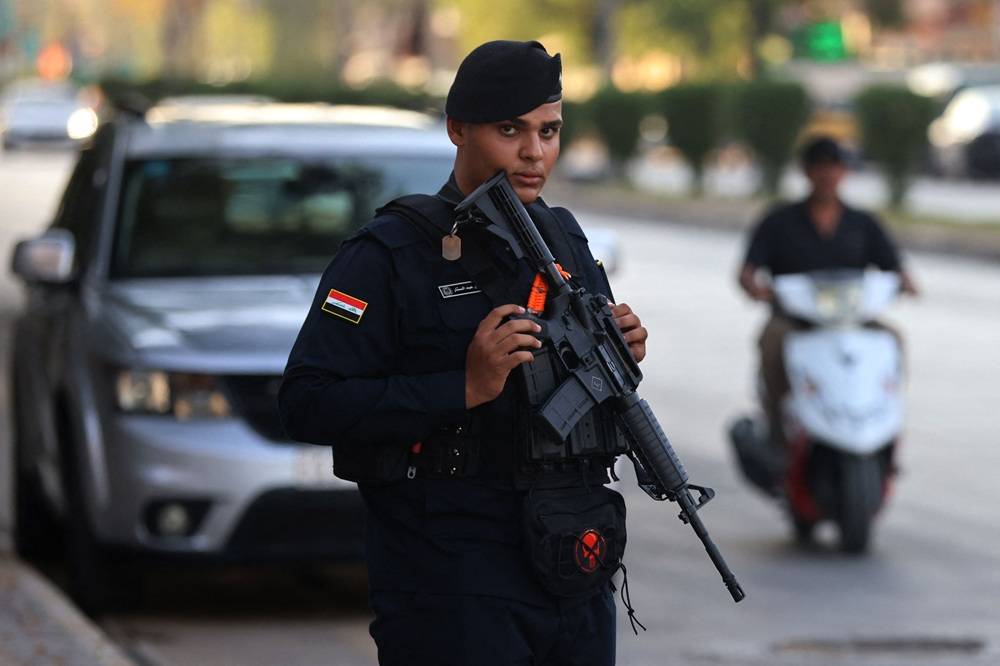
The government’s sweeping arrests on Sunday have drawn strong political and public support after targeting senior officials, lawmakers, and government directors, raising hopes that Iraq may finally curb corruption, which unofficial estimates say has cost the country more than $500 billion.
More than 50 suspects have been arrested so far, while some estimates suggest the number of wanted individuals could eventually exceed 1,000.
Dozens of activists gathered Sunday evening in Baghdad’s Tahrir Square to express support for the campaign.
Influential Shiite cleric Moqtada al-Sadr praised the “heroic reform measures,” saying the arrests had restored hope among Iraqis after years of entrenched corruption.
He commended the judiciary and security forces, particularly the Counter Terrorism Service, for carrying out the arrests.
More arrests expected
Ghalib al-Daami, a lecturer at the Iraqi Academy for Combating Corruption, told Asharq Al-Awsat that more than 50 prominent figures had already been detained and predicted the campaign could ultimately target more than 1,000 individuals.
While many observers doubt the crackdown will reach Iraq’s most powerful political leaders, al-Daami said he expects the “downfall” of three senior political figures in the coming days.
He also claimed the campaign has received direct US backing, particularly following the arrest of former Deputy Oil Minister Adnan al-Jumaili and another deputy minister, Ali Maarij al-Bahadli, who has been sanctioned by the US for allegedly facilitating Iranian oil sales.
Political scientist Firas Elias of the University of Mosul said the campaign represents “a real test of the state’s authority.”
Its success should be measured not by the number of arrests but by its ability to secure fair convictions and recover stolen assets, he added.
If the law is applied equally to everyone, the campaign could mark a turning point in relations between the state and Iraq’s political class, he remarked. But if it stops with selected figures or becomes a tool for settling political scores, it will quickly lose credibility and allow corruption to reemerge in new forms.
aawsat.com