
Lebanon and Israel sign framework agreement to end war
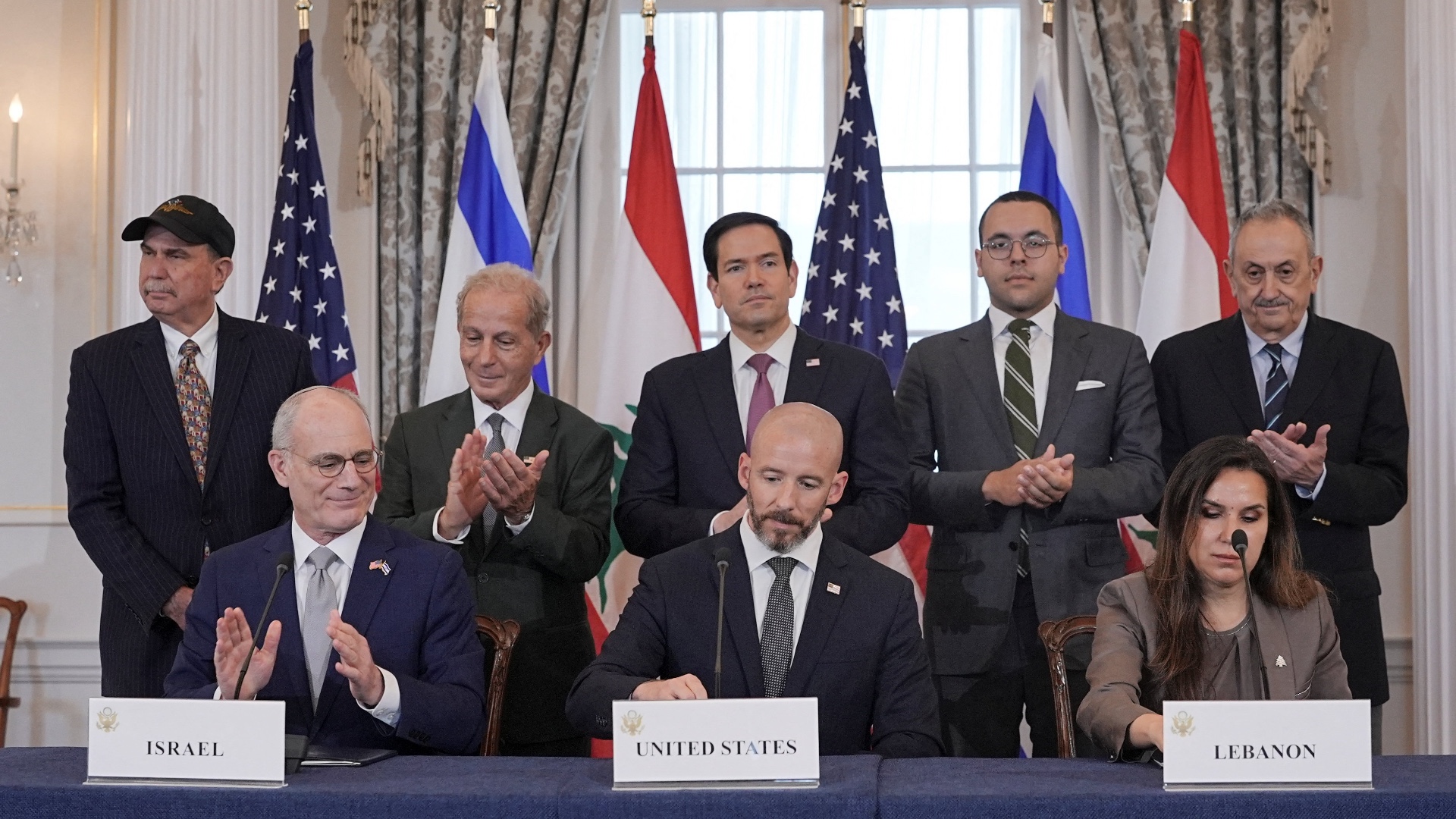
Lebanon and Israel have agreed to a deal as part of a trilateral framework with the United States in Washington on Friday, following five rounds of talks hosted by US President Donald Trump's administration.
Secretary of State Marco Rubio has called it "the beginning of the beginning" in remarks to reporters moments before the signing.
He later revealed in a written statement that the US would commit $100m in "humanitarian assistance in coordination with the UN" for affected communities, though he did not specify whether it was just for Lebanon or also for northern Israeli border towns.
The Lebanese Armed Forces, Rubio said, would be "reimbursed" by the Trump administration to the tune of $30m.
"This agreement establishes a clear and structured process to restore Lebanon's sovereignty, disarm Hezbollah and dismantle its terrorist infrastructure, and enable Israel to return to its borders once that threat to its citizens is removed," Rubio said.
New MEE newsletter: Jerusalem Dispatch
Sign up to get the latest insights and analysis on Israel-Palestine, alongside Turkey Unpacked and other MEE newsletters
It also creates a Military Coordination Group for Lebanon which will be facilitated by Washington, he added.
"For Lebanon, this Framework provides a genuine pathway out of a long crisis. For Israel, it creates a verifiable path to removing the persistent threat on its northern border."
Posting on X, Lebanese Prime Minister Nawaf Salam said the framework is a step toward "restoration of the state's sovereignty", but downplayed any new obligations on his country apart from previously stipulated agreements in United Nations Security Council Resolution 1701, and the 2024 ceasefire deal.
"Only the legitimate forces are authorized to bear arms in Lebanon," he said.
Hezbollah
Speaking to reporters at the signing event, which followed three consecutive days of talks, Rubio made reference to the key actor that was not represented in the discussions.
He said Israelis "have been targeted repeatedly by terrorist attacks launched from the territory of Lebanon - but not by the Lebanese people, not by the Lebanese government, but by an outside actor who has sought to use that territory".
Hezbollah refused to enter into direct discussions with Israel, but appears to have had backchannel communications with the Trump administration. The group remains the most powerful military organisation in the country, and far outflanks the capabilities of the Lebanese forces.
Lebanon's ambassador to Washington, Nada Hamadeh Moawad, described the meetings as "long and difficult".
"Today is a first step on the road to restoring Lebanese sovereignty and territorial integrity, securing a permanent and final cessation of hostilities, enabling our people to go back to their land, and allowing all Lebanese to live in peace, security and prosperity," she told reporters on Friday.
Her Israeli counterpart, Yechiel Leiter, said that Moawad fought for her country "like a lioness" during the discussions.
"Iran is out, Hezbollah is out and the road to peace between Israel [and] Lebanon is in," he said.
Little change
Israel's Prime Minister Benjamin Netanyahu said in a video posted to X on Friday that "the most important point is that Israel will remain in the security zone in southern Lebanon", and that maintaining that position is "a major achievement" until Hezbollah is disarmed.
Hezbollah has insisted that it cannot disarm while Israel remains a threat to Lebanon, and as Israeli officials normalise rhetoric about expanding Israel's borders to the north.
Netanyahu said that Israeli forces would be implementing "two pilot zones" in southern Lebanon - one south of the Litani River, and the other north of the waterway, allowing him to withdraw forces from specific areas there.
As Israeli forces move out, Lebanese forces will move in to take over, he indicated.
It's unclear how or when the ill-equipped Lebanese army will be ready for such a task, and whether it would be willing to fight Hezbollah's soldiers.
The Litani is a critical natural resource for Lebanon, but is also desired by the Israelis as the beginning of a "buffer zone" they claim is meant to protect their northern border towns.
Israel has advanced far enough from that border to occupy one-fifth of Lebanese territory so far.
Friday's signing comes the same week that the US and Iran agreed to a 14-point deal to end the US-Israeli war on Iran, which began on 28 February.
During that time, Israel ramped up its war on Lebanon, despite having signed a ceasefire agreement under former US President Joe Biden's administration in November 2024.
"This is also a major blow to Iran," Netanyahu said in his video address. "Iran is trying to force us into a withdrawal from southern Lebanon by force. In effect, Israel, Lebanon, and the United States are telling them: this is none of your business."
Tehran has said it sees a ceasefire in Lebanon as indispensable as part of discussions toward a permanent deal with Washington. Hezbollah, since its emergence in the 1980s to fight the Israeli occupation, has grown more and more reliant on Iranian support.
More than 4,200 Lebanese have been killed by Israel since 2 March, according to Lebanon's health ministry.
middleeasteye.net